News
All News


Videos
All videosThree missions at the heart of our work
The LIVES Centre develops innovative theories, methods and empirical studies through an interdisciplinary approach. It seeks to understand the forms and dynamics of vulnerability across the life course, analysing individual trajectories in light of the interplay between different life domains such as family, work, health, etc.
About the LIVES Centre
SCIENCE
To position the LIVES Centre as a national and international reference in interdisciplinary life course and vulnerability research.
TRAINING
To train and encourage the next generation of researchers with high skills in life course analysis.
SOCIETY
To transfer and co-build knowledge about the life course and vulnerability to/with professionals and the wider public.
Projects
All Projects
Subjective Well-Being Across the Life Course: A Global Research Program With 200+ Panel Datasets From 90 Countries
Led by Nicolas Sommet, Ariane Froidevaux, Franciska Krings, Ursina Kuhn, Charikleia Lampraki, Daniel Oesch
Subjective well-being, meaning life satisfaction or happiness, is a central indicator of human development. Influential theories hold that well-being follows a universal trajectory across the lifespan, declining until middle adulthood and rising thereafter, and that major life events affect it only temporarily.This project challenges these assumptions. It hypothesizes that both the course of well-being and the impact of life events depend strongly on country, and examines how far support from the state, the labour…
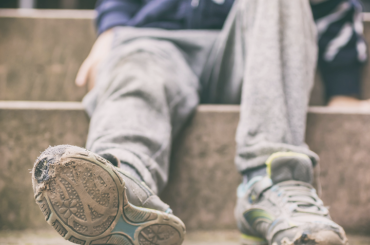
Lives after residential youth care
Led by Guy Elcheroth
Over the last decades, an increasing range of countries, including Switzerland, have addressed systematic maltreatment in state institutions, but empirical research on how dealing with the past can effectively benefit care alumni and their families is still relatively sparse.

The Social Stratification of Time: Investigating Inequalities in Time Use through a Swiss Diary Study
Led by Caroline Roberts, Damaris Aschwanden, Michael Grätz, Philippe Longchamp, Isabelle Stadelmann, Amal Tawfik, Leen Vandecasteele, Marieke Voorpostel
The social sciences have traditionally been interested in how access to material resources is socially stratified. However, a growing body of research highlights the importance of a non-material resource for quality of life: time.Differences in time use and time availability – particularly time poverty – vary widely across socio-economic groups and between men and women, making time use a crucial lens for understanding social stratification. Yet, social inequalities in time use remain under-researched, especially…

Evaluating primary suicide prevention in adolescents with risk factors
Led by Stephanie Baggio, Katia Iglesias
This project aims to test the effectiveness of a brief primary suicide prevention intervention among vulnerable adolescents through a randomized controlled trial (n=240).Vulnerable adolescents include those who are:detained in juvenile detention centers,who have dropped out of school,who are receiving treatment for psychiatric disorders,who identify as part of a sexual or gender minority,who are receiving treatment for a chronic somatic illness,and who are placed in group homes.The primary objective is to test the…

Study on the Social Relationships of Older Adults in the City of Geneva
Led by Charikleia Lampraki
This interdisciplinary research project examines the social relationships, social participation and experiences of social disconnection among adults aged 65 years and older living in the City of Geneva. Conducted by a team of LIVES researchers at the University of Geneva and commissioned by the City of Geneva, the study aims to identify older adults who may be particularly vulnerable to social isolation, understand the individual and contextual factors associated with reduced social connectedness, and document…
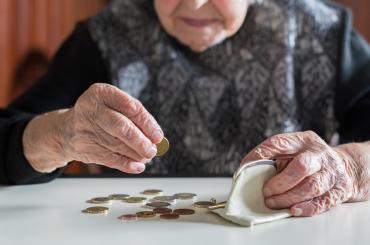
Poverty in Later Life in Rural and Mountainous Switzerland and United States : A Comparative Case Study
Led by Marion Repetti
While poverty is an economic and social status, it is also an experience. This research project, that will take place in two rural and mountainous regions of Switzerland and the U.S., seeks to understand the experience of poorer older people in such contexts. Existing literature shows that there are significant levels of poverty among older people in Switzerland and the U.S. National welfare states, in combination with advantages and disadvantages accumulated over the life courses, and statuses such as gender and…
Research articles
All research articlesPress review
All press reviewsPublic publications
Social change in Switzerland
The publication brings research on social change in Switzerland to readers beyond academia. It publishes innovative empirical findings that document the development and structure of Swiss society.
Social Change SwitzerlandLIVES Impact
The publication presents findings from studies conducted at the LIVES Centre that inform public and social policy. Published regularly in French, German and English, it is aimed at decision-makers in public administration, politics and non-governmental organisations.
LIVES Impact